Seed Engine
Using a PBS Aerospace TJ100 engine (250 lbf thrust class) and precooler functionality, the seed engine demonstrated a sufficient performance overlap between turbine and ramjet modes to justify the large-scale development of a Turbine-Based Combined Cycle (TBCC) engine.
Chimera I
Integrating a GE J85 engine (5,000 lbf thrust class), a precooler, a bypass, and a ramjet, Chimera I proved the transition characteristics of a TBCC at scale, successfully demonstrating mode transition between turbine and ramjet modes.
Gryphon I
Using a GE J85 engine (5,000 lbf thrust class), Gryphon I characterized subscale precooler performance at high supersonic speeds, optimizing precooler performance.
Gryphon II
Integrating Hermeus’ precooler technology with a Pratt & Whitney F100 engine (30,000 lbf thrust class), Gryphon II validated the functionality of a flight-scale precooler–turbine system during ground testing. Currently preparing for flight testing, Gryphon II will power our Mission Plane at high-supersonic speeds.
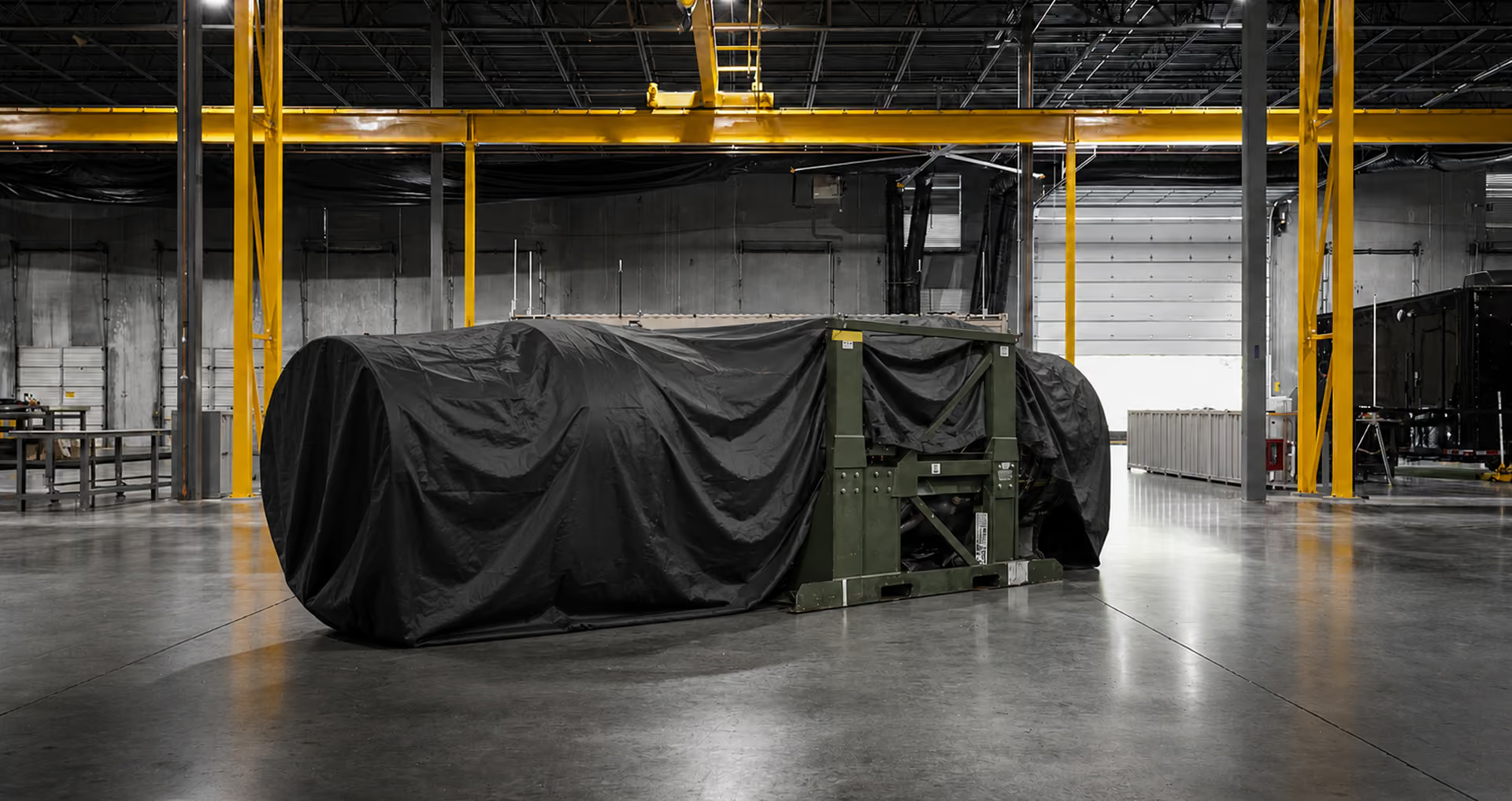
Chimera II
Using a Pratt & Whitney F100 engine (30,000 lbf thrust class) with Hermeus precooler, Chimera II will demonstrate in flight the functionality and performance of a flight-scale TBCC engine and power our Darkhorse aircraft.